Postnatal Workout Plan: Rebuild Strength, Protect Your Pelvic Floor and Feel Like Yourself Again
Something I notice with almost every woman who comes to re-centre is that she has already tried to get back to exercise. She has done the walks, maybe attempted a fitness class, possibly even gone back to the gym. And something has not felt right. There has been leaking, or heaviness, or a core that simply does not respond the way it used to. Or she has pushed through and paid for it afterwards.
The problem is rarely a lack of effort. It is almost always a lack of the right foundation.
Your body has done something extraordinary. A postnatal workout plan that actually works has to start from that reality, not from a culture that tells you to bounce back as quickly as possible. At re-centre, the plan I have built is structured around Hypopressives (Low Pressure Fitness) alongside postnatal-safe strength and mobility work, so that you are rebuilding from the inside out, in the right order, at the right pace.
Is this postnatal workout plan right for me?
This plan is designed for women who are postpartum, whether that is a few weeks or many years after birth, and who want to rebuild core and pelvic floor strength safely before returning to higher-impact exercise.
It is particularly relevant if you:
- Are dealing with a persistent “mum tum” that does not seem to shift regardless of what you do
- Experience leaking when you cough, sneeze, laugh, run or jump
- Feel pelvic heaviness or pressure, especially later in the day or after being on your feet
- Have been told you have Diastasis Recti or pelvic organ prolapse
- Struggle with back, neck or shoulder pain from the physical demands of feeding and carrying
- Want short, effective sessions that fit around feeding, naps and the general unpredictability of life with a baby
If you had a straightforward vaginal birth, gentle exercise can usually begin as soon as you feel comfortable, with more structured work from around your six-week check. After a caesarean or more complex birth, most women need eight to twelve weeks and specific clearance from their GP, midwife or consultant before starting a structured programme.
Here’s the condensed rewrite in your style and TOV:
When can I start exercising after birth?
There is no single timeline that suits every woman, and anyone who gives you one without knowing your birth history and current symptoms is not giving you the full picture. What evidence-based guidance does suggest is a phased approach.
Weeks 0 to 2: Rest and reconnect
Rest horizontally as much as possible. Lying down reduces pressure on the pelvic floor and perineum, and that matters more than most women are told in those early days.
Gentle pelvic floor awareness can begin within 24 hours of birth once you have passed urine and feel ready. Start with very gentle contractions, lifting and letting go, and focus as much on fully releasing between squeezes as on the contraction itself. This is especially important if labour was long, traumatic or involved instrumental delivery or perineal tears. Do not force it if there is significant pain.
Breathwork is your earliest and safest way of reconnecting with your core. Inhale through your nose, feel your ribs and belly gently expand, exhale through the mouth and feel your belly soften and your pelvic floor lightly recoil. This diaphragmatic breathing begins to restore the diaphragm, core and pelvic floor relationship while also calming the nervous system. It costs nothing and you can do it lying in bed.
Weeks 2 to 6: Early movement
From around two weeks, or later if you had complications or a caesarean, you can begin to add gentle movement:
- Short walks, starting with a few minutes and building gradually as tolerated
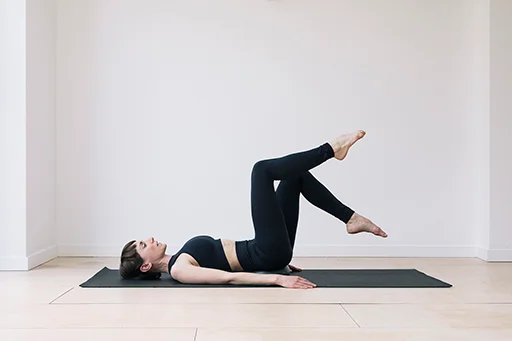
- Gentle pelvic tilts, heel slides and knee rolls to wake up the deep abdominals without strain
- Very light postnatal Pilates or postnatal yoga, with no crunches, planks or high load at this stage
After a caesarean, prioritise wound healing, comfortable positions and breath work. Avoid lifting anything heavier than your baby for the first six weeks unless your medical team advises otherwise.
6 to 12 weeks: Building your base
By six weeks, many women have their postnatal check. If you can access a women’s health physio assessment at this point, I would strongly encourage it. A physio can assess your pelvic floor strength, core function, any prolapse symptoms, caesarean scar mobility and diastasis recti, and give you a personalised baseline to work from.
When to start Hypopressives
This is the question I get asked most often.
From 6 weeks after a straightforward vaginal birth, if bleeding has settled and you feel comfortable. From 12 weeks after a caesarean, once the scar is reasonably healed and you have clearance from your medical team.
Hypopressives are an ideal bridge between early rehab and full training because they improve reflex activation of the pelvic floor and deep core, restore breathing mechanics and rib mobility after pregnancy, and train your system to manage intra-abdominal pressure with minimal strain. Start with short sessions of 5 to 10 minutes, two to three times per week, focusing on technique rather than intensity.
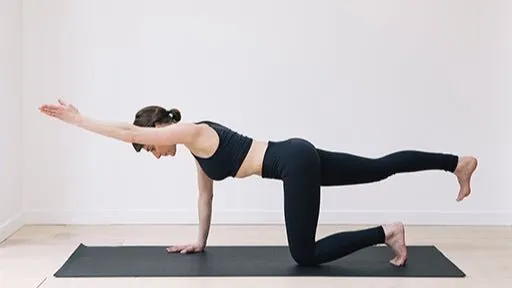
Alongside Hypopressives, build your pelvic floor work to multiple sets per day, combining long holds for endurance and short quick squeezes for power, always releasing fully between each. Progress your core work with heel slides, single-leg lifts, supported bridges and modified bird-dogs. Still avoid full sit-ups, long front planks and anything that causes doming along your midline or pelvic floor symptoms.
3 to 6 months: From rehab to real life
The three-month mark is where many women feel ready to push harder. That instinct is good. The key is making sure your internal support is actually ready to meet it.
The 2019 Returning to Running Postnatal guidelines are clear: aim for a return to running between three and six months postpartum, not earlier, and only when you meet certain strength and symptom criteria.
Before adding running, jumping or high-intensity workouts, you should ideally be able to:
- Walk briskly for 30 minutes without pelvic heaviness, leakage or significant pain
- Perform single-leg balance and single-leg squats with good control
- Complete functional tests like single-leg bridges, step-ups and dynamic core exercises without symptoms
If you leak, feel heaviness or notice abdominal doming with any of these, your system needs more time and support before you add impact. That is not a setback. It is useful information.
Why Hypopressives are at the heart of this plan
Most traditional core exercises work by increasing intra-abdominal pressure. Crunches, sit-ups, heavy planks, even some Pilates movements, all create a downward force on the pelvic floor and abdominal wall. For a postnatal body that is already dealing with weakened or stretched structures, that is often the last thing it needs.
Hypopressives work in the opposite direction. Using specific breathing and postural techniques, they lower intra-abdominal pressure and create a gentle vacuum effect that recruits the deep core and pelvic floor reflexively, without straining healing tissue.
This is why I build the postnatal workout plan around Hypopressives first. You need a stable, functional core foundation before you layer on more load and impact. Skipping that step is exactly why so many women end up back at square one.
Research and clinical experience suggest Hypopressives can:
- Recruit the transverse abdominis and pelvic floor without bearing down on structures that are still recovering
- Support recovery from Diastasis Recti by engaging the deepest abdominal layers from the inside out
- Reduce symptoms of pelvic floor dysfunction, including prolapse heaviness and urinary incontinence, by improving support and pressure management throughout the trunk
- Improve posture and spinal alignment, easing the back discomfort that builds up after months of pregnancy and hours of feeding and carrying
If you have been doing Kegels without results, this is likely why. Kegels isolate one muscle in one movement pattern. Hypopressives address the whole pressure system. The difference in outcome can be significant.
What is in the postnatal workout plan?
The plan combines Hypopressives, strength, mobility and low-impact cardio in short sessions that fit realistically into mum life.
Hypopressives fundamentals
Before anything else, you learn the technique. A live online Fundamentals session teaches you the Hypopressives breathing pattern, known as the Apnea, and the key postures. I give real-time feedback so you learn to perform the technique correctly and safely, with adaptations for your birth history, symptoms and current fitness.
Some women find the technique comes quickly. Others, particularly those who are tighter in the ribs or thoracic spine, take a little longer. Either way, getting this right at the start is what makes everything else work.
Core and pelvic floor recovery sessions
Short guided Hypopressives sequences of around 10 to 20 minutes, focused on rebuilding deep core and pelvic floor support. Exercises progress gradually from low-load positions, lying or on your side, towards upright postures as your control improves. The emphasis throughout is on breath, rib mobility and alignment, which supports both diastasis healing and pelvic floor function.
Postnatal-safe strength and mobility
Gentle strengthening for the glutes, legs, upper back and shoulders to support the physical demands of daily life with a baby. Lifting, feeding, carrying, none of it is light work, and your body needs to be strong enough to do it without compensating in ways that cause pain.
Mobility work addresses the rounded-forward posture that builds up through pregnancy and early parenthood, easing the neck, shoulder and lower back tension that so many women carry around for months without realising how much it is affecting them.
All movements are chosen to minimise downward pressure on the pelvic floor. Strong sit-ups, heavy planks, high-impact jumps and deep twisting are not part of early postnatal recovery. They have their place later, once the foundation is solid.
Low-impact cardio
Walking, pram-pushing and other low-impact cardio that can be scaled up gradually in duration and intensity as you feel stronger. I give guidance on how to monitor your response, breath, fatigue, pelvic floor symptoms, so you know when to hold, when to progress and when to pull back.
Progress tracking and check-ins
I provide one-to-one online check-ins with me to adjust your plan, refine technique and answer questions as you progress. This is not a programme you are left to figure out alone.
How often should I do the Hypopressive workouts?
Start with 10 to 20 minutes, three to four times per week, of core, pelvic floor and gentle strength work. Layer in short walks most days, gradually building duration as you feel able. As your body adapts and symptoms stay settled, increase frequency, add resistance and move towards more demanding sessions.
Consistency matters far more than intensity at this stage. Three short sessions a week done well will always outperform one long session that leaves you exhausted and symptomatic.
Always listen to your body. Fatigue, pain, increased bleeding, heaviness or leaking are signals to reduce intensity and seek individual guidance, not to push harder.
Safety guidelines for your postnatal workout
Get medical clearance before starting, especially after caesarean, assisted birth, significant tears or if you have ongoing symptoms.
Avoid early high impact. Running, jumping and HIIT are not appropriate until your pelvic floor and core are strong and symptom-free. For many women this takes six to twelve months, and that is not a failure. It is just how postnatal recovery works.
Skip strong sit-ups, heavy planks and loaded twists in the early months, particularly if you have diastasis recti or prolapse.
Stop immediately if you feel sharp pain, dizziness, chest pain, visual changes or a feeling of dragging or bulging in the pelvis. Contact a healthcare professional.
Monitor your bleeding. If lochia becomes heavier or brighter red after exercise, reduce your activity and check in with your midwife, GP or health visitor.
How re-centre works
Step 1: Subscribe to a live or on-demand membership
Step 2: Book your Fundamentals session to learn the Hypopressives technique
Step 3: Begin the beginner Hypopressives and postnatal strength classes
Step 4: One-to-one support to review progress and refine your practice
Step 5: Progress to more advanced levels at your own pace
All memberships include a live Fundamentals class, unlimited access to 300+ videos, one-to-one check-ins, new weekly content, full app access, priority access to live workshops and retreats, flexible cancellation and a 14-day free trial.