Short Summary
A postnatal class built around recovery works from the inside out: breath first, then the deep abdominals and pelvic floor, then load. That order matters more than the intensity. Most women are cleared to start gentle work around six weeks after an uncomplicated vaginal birth and later after a caesarean, though that is a starting point rather than a rule. I teach live classes every week plus a beginner series you can start at any point, and there is no time limit on when it is worth beginning.
The thing I hear most often from women joining a postnatal class is that they tried a normal one first and it made everything feel worse. That is not a failure of effort. Most general fitness classes start with exactly the movements a recovering abdominal wall and pelvic floor handle least well, and nobody warns you.
What a recovery class actually works on
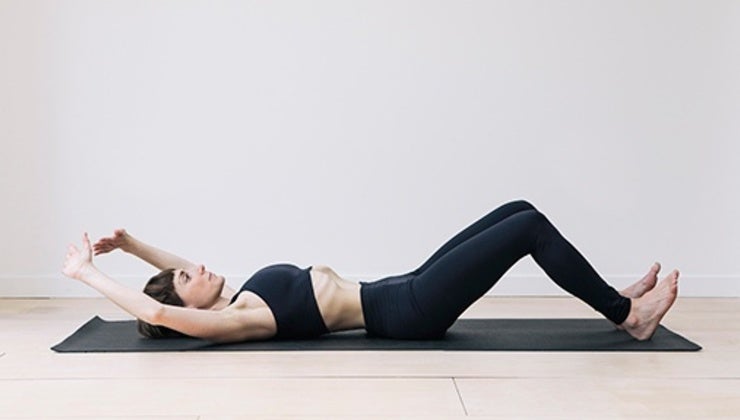
Breath comes first, because almost nothing else functions properly if you brace and hold your breath under load. Your diaphragm, deep abdominals and pelvic floor work as one system, and after birth that coordination is usually the part that has gone, rather than raw strength.
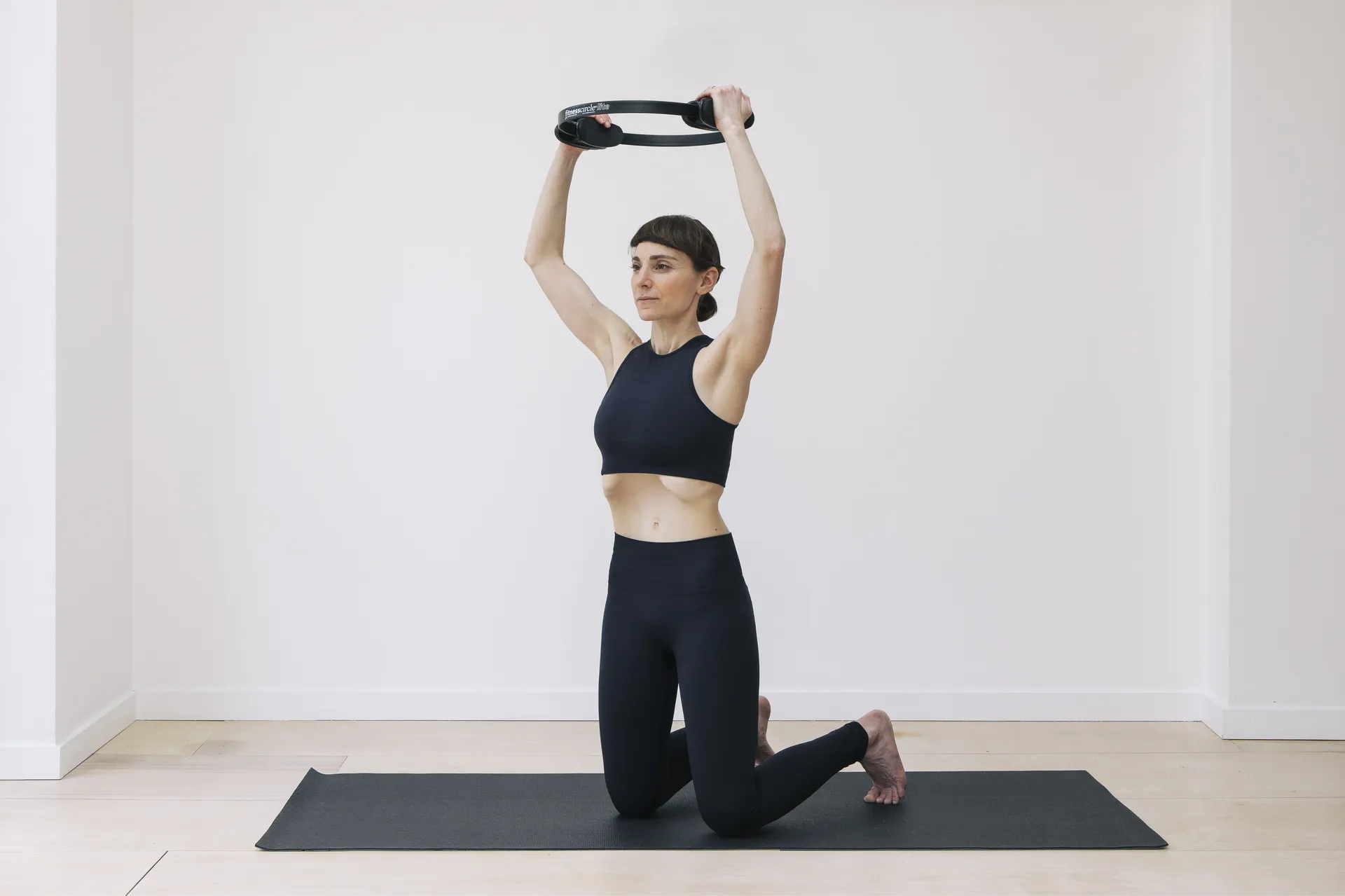
From there the sessions build deep core and pelvic floor work in positions that load the tissue without pushing down through it. Hypopressives does this through a breath hold and specific postures, and a 2026 study measuring pelvic floor activity directly recorded levator ani activation at 37% of a maximum voluntary contraction lying down and 47% standing. The muscle is genuinely working, without the downward load.
Load comes last. Standing work, then weights, then the things you actually want back, whether that is running, lifting a toddler or a class that leaves you tired in a good way.
What gets left out, and why
- Curl ups and sit ups. They push the connective tissue down the middle of your abdomen outward, which is visible as doming and is the opposite of building tension across it.
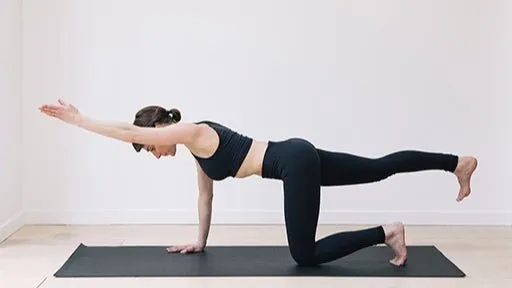
- Strong planks, early on. Not forever, just not before the deep layer is doing its job.
- Breath holding under load. The single most common habit I correct, and the one that undoes the rest.
- Deep twists and intense backbends in the early months, particularly with diastasis recti or prolapse symptoms.
None of that is permanent. It is a sequence, not a list of bans.
What the evidence says about recovery training
A 2026 systematic review and meta-analysis pooling nine randomised controlled trials and 450 postpartum women found that structured exercise significantly reduced the distance between the abdominal muscles, by an average of around eight millimetres compared with no treatment. Programmes starting within three months of birth achieved more, around ten millimetres, but the benefit did not disappear for those starting later.
Interestingly no single type of training beat the others. What consistently beat doing nothing was structure: a programme, followed properly, for long enough. That is reassuring if you have been agonising over picking the right method.
On the pelvic floor side, a randomised controlled trial of 117 women found that eight weeks of supervised Hypopressive training improved pelvic floor muscle strength and reduced the severity of urinary incontinence symptoms.
How the classes run
- Live classes with me each week, where I can see what you are doing and correct it. Supervision is the version of this that the research tested.
- A beginner series that teaches the breath from scratch, which is where nearly everyone starts.
- 350+ recorded classes from 5 to 45 minutes, for the weeks when a fixed time is impossible.
- Programmes built around diastasis recti, prolapse and postnatal recovery specifically, rather than general fitness with a postnatal label.
- A one-to-one check-in with me to talk through symptoms and what to prioritise.
I am Simone Muller, founder of re-centre. I trained in Vigo, Spain in 2017 and became London’s first fully qualified Level 3 Low Pressure Fitness instructor, after fifteen years as a dancer and twenty five years teaching Pilates. I came to this work through my own recovery: a third degree tear after my first child, and a rehabilitation that did very little for me.
What to track before you start
- Whether anything leaks, and what you were doing at the time
- Whether you feel heaviness or dragging, and whether it changes through the day
- Whether your middle domes or bulges when you sit up or lift
- What you have already tried, and what happened
- Anything that feels too minor to mention, which is usually the useful part
When to Seek Assessment
This page is educational and cannot diagnose the cause of your symptoms. Arrange assessment with a GP, midwife or pelvic health physiotherapist before starting if you are leaking urine or stool, feel heaviness, dragging or a bulge, have pain with movement or sex, or have a gap in your abdominal wall that domes under load. Seek urgent medical advice if bleeding becomes heavier or bright red again after slowing, you develop a fever, or you have severe or one sided pain.
If you are not sure what you are dealing with, our guide to checking for diastasis recti walks through the self check and what the result means.
Sources
- Capoccia Giovannini et al. (2026): Non operative management of postpartum diastasis recti, a systematic review and meta-analysis of randomised controlled trials, Hernia
- Molina-Torres et al. (2023): An 8-week hypopressive exercise training programme on urinary incontinence and pelvic floor muscle activation, Neurourology and Urodynamics
- Saraiva and McLean (2026): Intra-abdominal pressure and pelvic floor muscle activation during hypopressive exercises, Physiotherapy
- NHS: Exercise after birth, returning to activity safely
- Pelvic Obstetric and Gynaecological Physiotherapy: Finding a specialist physiotherapist