If you have been struggling with urinary incontinence, you might have noticed that certain positions seem to make things worse. Do you often have an urge to pee while sitting somewhere for too long or slouching while reading or watching something? If yes, your urinary problem is possibly related to bad posture.
Fortunately, there are certain postnatal core exercises that can prevent these unwanted situations. Hypopressive exercises can improve both your posture and bladder control at the same time.
The Connection Between Poor Posture and Urinary Incontinence
When you slouch or hunch, it can actually put extra pressure on your bladder, making leaks more likely. It’s all about the anatomy of our body—the way all the organs and muscles are aligned.
Of all the poor postures, slouching, in particular, causes stress incontinence. It puts excessive pressure on the abdominal region, which strains the bladder. Everything affects the pelvic floor muscles, which start losing their ability to hold against that pressure.
How Hypopressives Correct Postures and Improve Urinary Incontinence
In short, Hypopressives are a set of breathing and postural exercises that reduce pressure in several areas inside your body.
Think of your core as a set of muscles designed to act automatically. When you do an apnea, the correct postural muscles are engaged involuntarily. It reduces excessive downward pressure on your bladder and pelvic floor. As a result, the muscles can re-engage properly and support your body in a more natural way.
You might be wondering, “How can Hypopressives improve my posture?” We’ve discussed a few benefits here:
1. Helping with Better Alignment
What do you think happens inside our body when we slouch or hunch over? Our spine and rib cage collapse, putting strain on the muscles and organs around them.
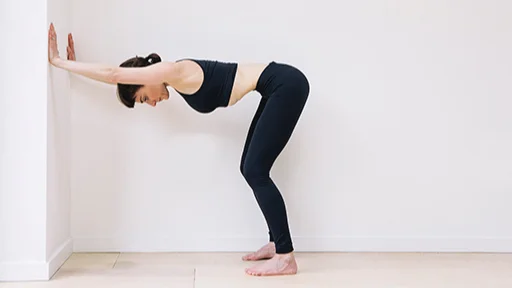
Hypopressives help by guiding you into positions that can improve spinal alignment and stability. The apnea also opens up the rib cage by stretching the respiratory diaphragm. So, learning to hold these postures strengthens your core and improves overall alignment.
This practice reduces the tension that poor posture causes in your body. Over time, you’ll start to notice a more stable and balanced posture, which can help with back pain, muscle strain, and pelvic floor issues.
2. Improving Proprioception and Body Awareness
Proprioception is our body’s ability to be aware of its position and movements. Doing Hypopressives allows you to have more control of your breathing and muscle engagement, which enhances proprioception without conscious effort.
And better proprioception means the body is more aware of its position, which helps with intuitive correction of your slouching and other poor postural habits. As a result, you can maintain better postures during daily activities.
3. Reducing Muscle Tension and Imbalances
Muscle imbalances, such as tightness in the chest or hip flexors and weakness in the back or gluteal muscles, are often the reasons we have poor posture – think: slouched shoulders, head forward, and tucked pelvis.
Hypopressive exercises are good for regaining muscle balance. They promote relaxation of overactive muscles and activation of underactive ones, helping to restore balance and alignment in the musculoskeletal system.
4. Improving Bladder Control
So, how do these exercises help with urinary incontinence? Practicing these moves decreases the internal pressure in your abdomen. This is really important because excessive pressure is one of the main culprits behind bladder leaks.
Hypopressives focus on special ways of breathing and positioning your body. They help relax the diaphragm (the muscle that helps you breathe) and activate other muscles around your stomach and spine. When you do these movements, the pressure inside your belly goes down, which triggers muscles like your pelvic floor (around your lower belly), abs, and spine to become stronger and more stable. It’s a gradual process of improving your posture and core strength.
For people not suffering from urinary incontinence, their core, including the pelvic floor, works automatically when they bend down to pick something up, sneeze, or laugh. They don’t need to consciously “squeeze” those muscles to prevent leaking. Hypopressives help your body get back to that natural state of stability.
Getting Started With Hypopressives
For the Hypopressives classes it is important that you learn the Breathing/Apnea technique properly so that you can get the most out of the classes and the time you invest in yourself. Each week Simone runs Fundamentals sessions on Zoom where she explains the technique and guides you through all the steps.
She will also give you feedback to make sure that you’re doing it correctly. For some, the technique may come more quickly than others. Some of her clients, who are tighter in the ribs and thoracic spine do tend to take a little longer. And here’s the golden rule – for impactful change, Simone recommends at least three 15 to 20-minute workouts per week. Consistency is your best friend on this journey towards wellness.