Prolapse and incontinence: you are not imagining the connection
Something I see regularly in my work is women arriving who are managing both pelvic organ prolapse and bladder leaks at the same time — and feeling like their body has completely let them down. They are exhausted by it. And often, they are scared to move.
What most of them have not been told is that these two conditions are not separate, unrelated problems that have unluckily arrived together. There is a shared reason they co-occur, and understanding it changes everything about how you approach managing both.
This guide explains why prolapse and urinary incontinence so frequently happen together, how the same underlying pressure system drives both, and why a consistent, low-pressure approach like hypopressives is particularly well suited to supporting you when you are dealing with both at once.
Why do prolapse and bladder leaks so often happen at the same time?
The answer comes down to one thing: pressure management. Your pelvic floor, deep core, and the pressure inside your abdomen all work as a connected system — not as separate parts. When that system is under strain, it rarely fails in just one place.
Your pelvic floor has two jobs — and both can be affected at once
Your pelvic floor is a group of muscles and connective tissue that sits at the base of your pelvis. It does two things that are directly relevant here: it supports your pelvic organs — bladder, uterus, and bowel — against gravity and everyday pressure, and it maintains bladder and bowel control by closing off the urethra when it needs to.
When the pelvic floor is weakened, under-coordinated, or overwhelmed by downward pressure from above, both of those jobs can be compromised at the same time. That is the shared root of prolapse and stress urinary incontinence — and it is why the two so frequently arrive together.
The role of intra-abdominal pressure
Every time you cough, sneeze, lift, or strain, pressure builds inside your abdomen and pushes downward through your pelvic floor. In a well-coordinated system, your pelvic floor reflexively tightens to meet that pressure before it arrives. When that coordination has been disrupted — through childbirth, hormonal changes, or years of repeated downward loading — the pressure goes unchecked.
Unchecked downward pressure is what causes organs to descend (prolapse) and what overwhelms the urethral closing mechanism and causes leaking (stress urinary incontinence). Same pressure problem, two different expressions of it.
Shared risk factors
Pregnancy and vaginal birth, the hormonal shifts of perimenopause and menopause, and connective tissue changes all affect the support structures around your pelvic organs and the continence mechanism at the same time. Research suggests that around 40–54% of women with pelvic organ prolapse also experience stress urinary incontinence — which is a significant overlap, and not a coincidence.
The hormonal change of menopause is particularly relevant. As oestrogen drops, the tissues, ligaments, and muscles that support your pelvic floor all lose some of their thickness and elasticity simultaneously. If your pelvic floor was already working hard after pregnancies or births, this stage can unmask or worsen symptoms that had been manageable before.
If you also have Diastasis Recti: abdominal separation adds another layer to the pressure picture, because the abdominal wall plays a role in how load transfers to the pelvic floor. I have written a separate guide on diastasis recti and prolapse together, which is worth reading alongside this one if that applies to you.
How Hypopressives can help when you have both
This is where I want to be honest with you about why I use Hypopressives as a central part of re-centre’s approach — rather than just recommending more Kegels.
Conventional pelvic floor exercises train the pelvic floor muscles to contract and squeeze. That matters, and there is strong evidence for it. But for women dealing with both prolapse and incontinence, the issue is often not just muscle strength — it is pressure management. And that is precisely what Hypopressives train.
What Hypopressives actually do
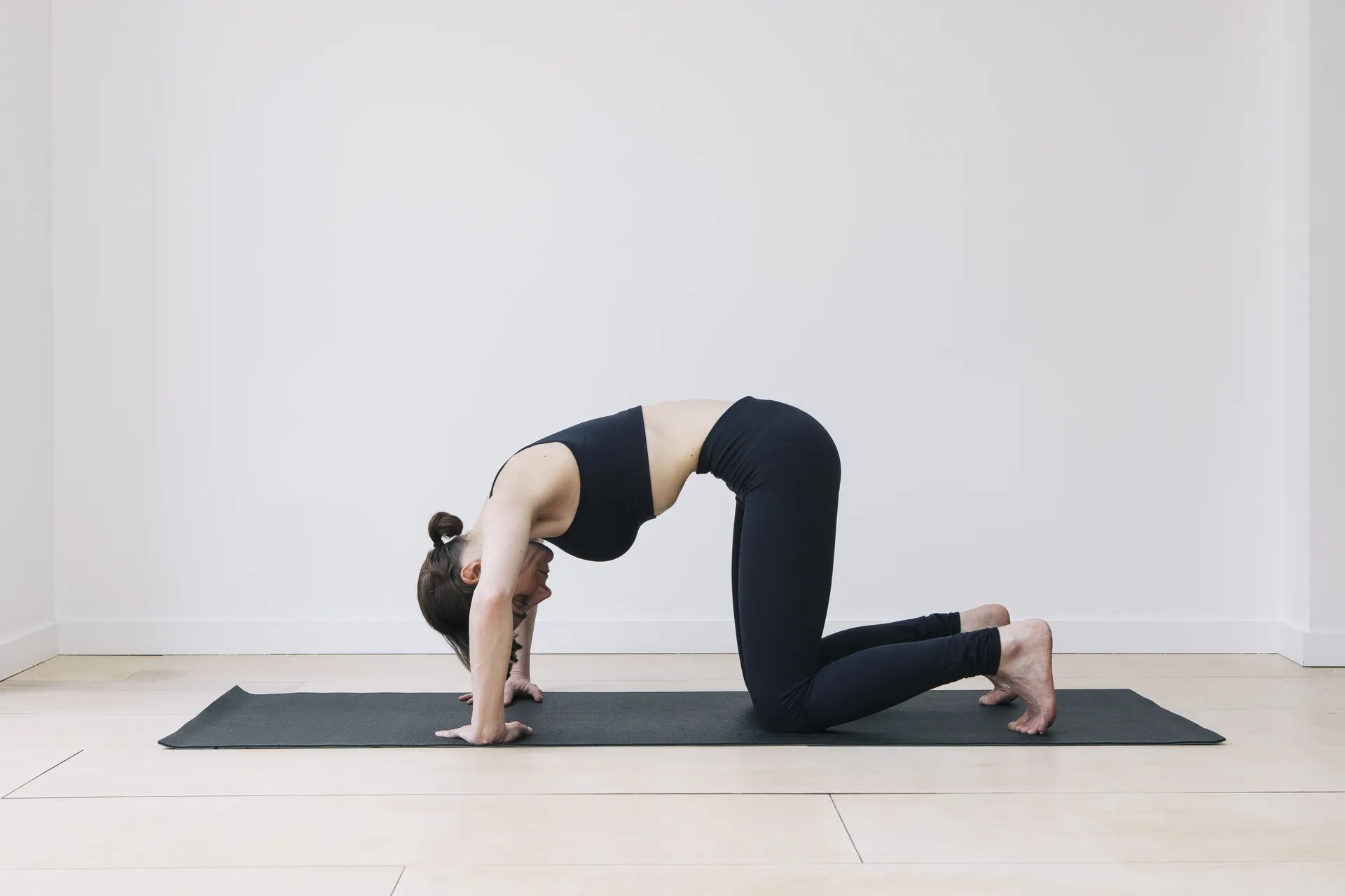
Most pelvic floor advice asks you to squeeze on command. Hypopressives work differently. You hold a specific posture, exhale fully, then pause before your next breath, that pause is called an apnoea. It draws the diaphragm upward and drops pressure through the torso, and your pelvic floor responds to that pressure drop by lifting on its own, with no conscious contraction needed. Practised consistently, that automatic response becomes more reliable, and that reliability is exactly what both prolapse support and bladder control depend on.
This matters because the usual approach to both conditions leans on voluntary effort: squeeze when you feel a cough coming, squeeze to hold your organs up. Hypopressives train the reflex itself, so it’s there before you have to think about it.
How this supports prolapse symptoms
The reflex lift created during hypopressive practice helps restore tone and coordination in the pelvic floor muscles that support your organs. Over time, and with consistent practice, many women notice a reduction in the heaviness or dragging sensation associated with prolapse — particularly towards the end of the day when symptoms tend to be at their worst.
Because the technique reduces downward pressure rather than adding to it, it allows your pelvic floor to recover without the repeated loading that higher-impact exercise can create. For women with prolapse who have been told to stop exercising entirely, this is often where we start.
How this supports bladder control
The same reflex lift and deep core activation that supports your pelvic organs also strengthens the mechanism that controls bladder leaks. Because Hypopressives train the pelvic floor to respond to pressure changes reflexively, rather than on command, many women find they begin to manage stress leaks more effectively in everyday life: during a cough, a sneeze, getting up from a chair.
Around 40–54% of women with pelvic organ prolapse also deal with stress incontinence, this is not a coincidence, it’s the same pressure system failing in two places at once. The clearest trial evidence for Hypopressives comes from a study of 117 women with pelvic floor dysfunction who followed an 8-week programme. Beyond the strength gains, what stood out most was the change in ICIQ-SF incontinence severity scores and in how much less the symptoms interfered with daily life; the quality-of-life measures that matter more day to day than a strength number on its own.
One approach, both conditions
This is why re-centre’s programme suits women managing multiple pelvic floor symptoms at once. You do not need a separate plan for your prolapse and a separate plan for your leaking. Hypopressives address the common root of both — intra-abdominal pressure management and pelvic floor coordination — in a single, consistent practice.
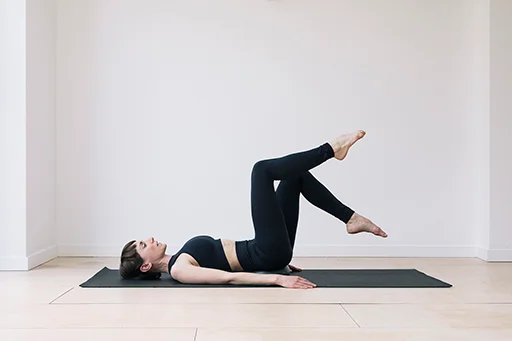
That said, Hypopressives work best as part of a layered approach. If you are also doing structured pelvic floor muscle training (Kegels done correctly, with the right technique), the two complement each other well: Hypopressives for pressure strategy and reflex support; pelvic floor muscle training for specific muscle strength.
Where to begin
If you are new to Hypopressives, the most important first step is learning the apnoea breathing technique before anything else. Without it, the exercises do not produce the same reflex response — and it is the technique that makes Hypopressives different from any other core or breathing work you may have done before.
- Start with the Getting Started with Hypopressives video inside your re-centre membership. It walks you through the apnoea technique step by step, at your own pace, before your first session.
- Once you are comfortable with the technique, the live Fundamentals session with me is an optional next step for personalised feedback on your form. Some women find the technique comes quickly; others — particularly if there is some tightness in the ribs or thoracic spine, take a little longer. Either way, I will guide you through it.
- Consistency matters more than duration. Aim for three sessions a week, 15 to 20 minutes each. That’s the frequency the research is built on, and it’s realistic enough to actually maintain, which matters more than any single longer session ever will.
A note on safety: if you are experiencing pain, a strong dragging or heaviness sensation, or symptoms that feel like they are getting worse rather than stable, please see a pelvic health physiotherapist or your GP before starting an exercise programme. re-centre is designed to support your recovery, not to replace clinical care. If you are unsure whether your pelvic floor is weak, tight, or both, a pelvic health physio assessment is a genuinely useful starting point.
Many women with prolapse and incontinence spend a long time feeling uncertain about what movement is safe. You do not have to stay there. The hypopressive approach gives you something consistent, low-risk, and evidence-aligned to build from — and I am here to guide you through every stage of it.