Short Summary
Hypopressives training online works well because the technique is taught through breath and position rather than effort, so it translates to a mat at home. What matters is having someone watch you do it. I run live classes every week where I can see and correct your technique, alongside a library of recorded classes from 5 to 45 minutes. Most people start with three sessions a week of 15 to 20 minutes. If you have had a baby in the last few months or have symptoms you have not had assessed, get checked first.
The question I get asked most about online training is whether it really works without someone in the room. It is a fair question, and the honest answer is that it depends entirely on whether anyone is watching you. Hypopressives is a technique rather than a workout. Done well it produces a distinct lift that most people feel in their first session. Done with a braced stomach and a held breath, which is what the body defaults to, it does very little.
What the training actually involves
The heart of it is a breathing pattern called an apnea, held in specific postures. You exhale fully, hold, and open your rib cage. Your diaphragm lifts, and your pelvic floor engages with it. There is no squeezing, and nothing is pushed downward.
That last point is what separates this from most core work. A 2026 study measuring pelvic floor activity directly recorded levator ani activation at 37% of a maximum voluntary contraction lying down and 47% standing during the manoeuvre. You are genuinely recruiting the muscle, without the downward load that comes with crunches or heavy bracing.
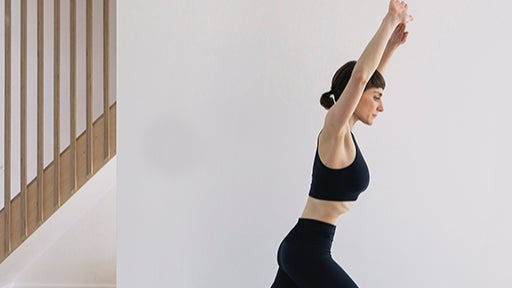
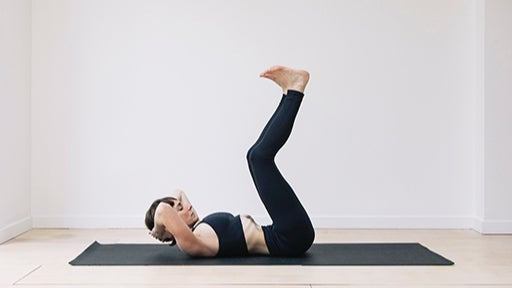
Once the breath is reliable, the postures progress. Lying, then kneeling, then standing, then standing with movement. That progression is most of what a structured programme gives you over a one-off video.
How training with me works week to week
- Live classes with me every week. This is where I watch what you are doing and correct it. It is the part that makes online training work rather than just exist.
- 350+ recorded classes, from 5 minutes to 45, so a difficult week does not have to mean nothing at all.
- A beginner series that teaches the technique from scratch, which is where almost everyone starts.
- A one-to-one check-in with me when you need it, to talk through symptoms, progress or anything that does not feel right.
- Programmes built around specific concerns, including prolapse, diastasis recti and the postnatal period.
You can practise on iOS, Android or a laptop, so the live classes work from wherever you are.
Who is teaching you
I trained in Vigo, Spain in 2017 and became London’s first fully qualified Level 3 Low Pressure Fitness instructor. Before that I spent fifteen years as a dancer, trained at the Royal Ballet School, and have taught Pilates for twenty five years. I came to this work after my own first birth, a third degree tear, and a recovery where traditional rehabilitation did very little for me.
That history matters mainly because it means I have watched a great many people perform this technique badly and know what to look for. I now teach from Portugal, run small in-person groups near Lisbon, and hold workshops in London from time to time.
What a realistic start looks like
Three sessions a week of 15 to 20 minutes is a sensible starting point, and it is safe to practise daily once your body has adjusted, which takes around two weeks. First thing in the morning before eating is ideal, since the technique works better on an empty stomach.
In a randomised controlled trial of 117 women, eight weeks of supervised Hypopressive training improved pelvic floor muscle strength and reduced the severity of urinary incontinence symptoms compared with no intervention. Note the word supervised. That is the version of this that was tested, and it is the reason the live classes exist rather than a library on its own.
Before you start
The breath hold is not suitable for everyone. Do not practise it if you are pregnant, have a heart condition, have uncontrolled high blood pressure, or are less than six weeks after a vaginal birth or twelve weeks after a caesarean. During pregnancy you can still hold the postures, simply without the breath hold, which is what I teach anyone in that position.
When to Seek Assessment
This page is educational and cannot diagnose the cause of your symptoms. Arrange assessment with a GP or pelvic health physiotherapist before starting if you are leaking urine or stool, feel heaviness, dragging or a bulge, have pain with movement or sex, or have symptoms that are new, severe or changing. NICE guidance recommends a supervised pelvic floor muscle training programme as first line treatment for stress and mixed urinary incontinence, and plenty of my members train alongside physiotherapy rather than instead of it.
If you would rather understand the technique before committing to anything, our guide to who should avoid Hypopressives covers the safety side in full.
Sources
- Molina-Torres et al. (2023): An 8-week hypopressive exercise training programme on urinary incontinence and pelvic floor muscle activation, Neurourology and Urodynamics
- Saraiva and McLean (2026): Intra-abdominal pressure and pelvic floor muscle activation during hypopressive exercises, Physiotherapy
- NICE NG123: Urinary incontinence and pelvic organ prolapse in women, management
- Pelvic Obstetric and Gynaecological Physiotherapy: Finding a specialist physiotherapist