Quick Answer
Diaphragmatic breathing, the core mechanic behind Hypopressives, has real randomised-trial evidence behind it: it meaningfully eases reflux and significantly reduces bloating, and the deep vacuum phase moves your diaphragm several times further than an ordinary breath does, gently mobilising the organs beneath it. Hypopressives itself hasn’t been tested as a complete method on digestion yet, so it’s best understood as a genuinely promising, breathing-based support for comfort rather than a treatment for a diagnosed condition such as IBS. If constipation is your main concern, diet, hydration and toilet habits have the strongest evidence and are worth prioritising first.
A lot of the women I teach ask about digestion once they have been practising Hypopressives for a few weeks. They mention feeling less bloated after a big dinner, or needing the loo more predictably, and want to know whether that is the exercises or just a coincidence.
Honestly, it’s probably both, and there is real science behind the breathing itself, even though no one has put Hypopressives through that exact test yet. Here’s what the research on diaphragmatic breathing actually shows, where Hypopressives genuinely fits into that picture, and the one place the evidence runs out.
What Your Diaphragm Has to Do With Digestion
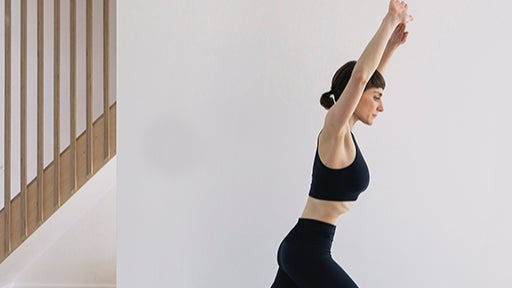
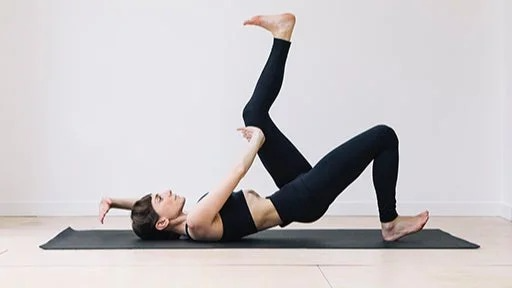
Your diaphragm does not only move air in and out of your lungs. With a normal breath it travels roughly one to two centimetres up and down, but during the vacuum phase of Hypopressives, when you empty your lungs and draw your ribs and abdominal wall up and in, it can rise several times further than that.
Think of your diaphragm as a slow, broad piston sitting directly above your stomach, liver and intestines. Each time it rises further than usual, it gently compresses the organs beneath it, and each time it releases, blood flow and movement return to that same space. This is a genuine anatomical relationship, not something specific to Hypopressives — it’s simply what a larger diaphragm excursion does mechanically, and it’s exactly the kind of movement the research below has actually tested.
The Research That Actually Exists: Breathing, Reflux and Bloating
Diaphragmatic breathing training has been tested directly against real digestive symptoms, and reflux is where the evidence is most established. In a small but real randomised controlled trial, nineteen people with gastro-oesophageal reflux disease were split into a breathing-training group and a control group. After several weeks, the training group had significantly less time with stomach acid sitting in the oesophagus, better quality of life scores and less reliance on reflux medication, while the control group showed no change (Eherer et al., American Journal of Gastroenterology, 2012). A more recent review pooling ten such trials found a real, if modest, improvement in reflux symptom scores overall, though the studies varied a lot in design and quality of life did not improve as consistently (Abureesh et al., Journal of Clinical Medicine, 2026). If reflux or a hiatal hernia is already part of your picture, my guide to exercising safely with a hiatal hernia is worth reading before you start, since the breath-holding phase needs a bit more care in that situation.
Bloating has its own, quite striking, piece of evidence. In a placebo-controlled trial, one group of people with meal-triggered abdominal bloating were trained to consciously correct the way their diaphragm and abdominal wall move, using real-time feedback, while a placebo group took an inactive capsule instead. The trained group’s bloating scores dropped by around two-thirds, with measurable changes in muscle activity and abdominal girth, and none of this happened in the placebo group (Barba et al., Gastroenterology, 2024). This is a different, more specialised technique to Hypopressives, developed by a separate research team, but it shows that deliberately training how your diaphragm and abdominal wall move together can have a real, measurable effect on a genuine digestive symptom.
Hypopressives itself has its own, growing evidence base too: a 2025 systematic review of thirteen randomised trials found real benefits for the pelvic floor, posture and core strength (Hernandez-Lucas et al., Healthcare, 2025). Digestion hasn’t been measured directly in that research yet, so the breathing and bloating trials above are, for now, the closest real evidence we have — and a good reason to expect Hypopressives could help in a similar way.
Where Hypopressives Fits Into This Picture
Hypopressives shares the same basic ingredient as the breathing exercises and biofeedback training used in those trials: training your diaphragm and abdominal wall to move further, and more deliberately, than they do during an average day, even though it is a distinct technique in its own right. In my own experience teaching the method, many women do notice less bloating and more predictable digestion within a few weeks of consistent practice, particularly if they tended to breathe shallowly or hold tension through the ribs and stomach before starting.
That’s a pattern from the classes I teach, not a clinical trial, but it sits well alongside the adjacent evidence above, and Hypopressives works best as a complement to your usual digestive care, not a replacement for it.
What About Constipation?
Constipation is the one area where I want to be completely direct: a gentle mobilising effect on the abdominal organs is a real mechanical possibility, but no trial has tested Hypopressives on constipation itself, so I’m not going to claim it does something the research hasn’t shown.
What does have strong evidence behind it is a related technique: manual abdominal massage, performed by hand over the colon. Recent systematic reviews pooling multiple randomised trials have found that abdominal massage increases weekly bowel movements and improves constipation symptoms and quality of life compared with no massage (Huang et al., International Journal of Nursing Studies, 2025; Lin et al., Complementary Medicine Research, 2025). It’s a different, hands-on technique to Hypopressives’ internal vacuum action, but it’s good evidence that deliberately working the abdominal organs can genuinely improve bowel regularity — exactly the kind of adjacent science that makes Hypopressives worth trying for comfort, even without a dedicated trial of its own yet.
If constipation alongside prolapse is your main concern, my guide to managing constipation and prolapse covers the diet, hydration and toilet-habit changes with the strongest evidence behind them — a good place to start alongside your practice.
Simple Things Worth Noticing Alongside Your Practice
None of these are rules, just a few things worth paying attention to if digestion is part of why you are curious about Hypopressives:
- Whether bloating tends to follow particular meals rather than happening randomly through the day
- How you are breathing most of the time: short and high in the chest, or lower and fuller through the ribs
- Whether you tend to hold your stomach in out of habit, which can itself restrict normal digestive movement
- How consistently you are drinking water and eating fibre, since these affect bowel regularity more reliably than any single exercise
Noticing these patterns will tell you more about what is actually going on than any single exercise claim, mine included.
When to Seek Assessment
This guide is educational and cannot diagnose the cause of any digestive symptom. See a GP promptly if you notice unexplained weight loss, blood in your stool, vomiting, difficulty swallowing, or a change in your normal bowel habit that lasts more than a few weeks, particularly if you are over 50 or have a family history of bowel conditions. These symptoms have many possible causes, most of them straightforward, but they need a clinician’s assessment, not a breathing technique. If your main concern is pelvic pressure alongside constipation, or ongoing bloating with no other explanation, a GP or pelvic health physiotherapist can help you work out what is actually going on.
If you would like to understand the technique itself before trying it for digestion specifically, my guide to practising Hypopressives on an empty stomach explains why timing matters, and my guide to who should avoid Hypopressives is worth checking first if you have a diagnosed digestive or health condition. You’re welcome to start a free 14-day trial to learn the technique properly from the beginning.
Sources
- Eherer AJ, Netolitzky F, Högenauer C, Puschnig G, Hinterleitner TA. Positive Effect of Abdominal Breathing Exercise on Gastroesophageal Reflux Disease: A Randomized, Controlled Study. American Journal of Gastroenterology, 2012.
- Abureesh O, et al. Efficacy and Safety of Diaphragmatic Breathing Exercises for Gastroesophageal Reflux Disease: A Systematic Review and Meta-Analysis. Journal of Clinical Medicine, 2026.
- Barba E, Livovsky DM, Accarino A, Azpiroz F. Thoracoabdominal Wall Motion-Guided Biofeedback Treatment of Abdominal Distention: A Randomized Placebo-Controlled Trial. Gastroenterology, 2024.
- Hernandez-Lucas P, Escobio-Prieto I, Moro López-Menchero P. Effects of Hypopressive Techniques on the CORE Complex: A Systematic Review. Healthcare, 2025.
- Huang SY, Chiao CY, Chien LY. Effectiveness of Abdominal Massage on Chronic Constipation in Adults: A Systematic Review and Meta-Analysis. International Journal of Nursing Studies, 2025.
- Lin Z, Wang D, Fei X, Han D, Liu Z. Effect of Abdominal Massage on Constipation: A Systematic Review and Meta-Analysis of Randomized Controlled Studies. Complementary Medicine Research, 2025.