I teach Hypopressives in person in Estoril, Cascais, on Tuesday mornings at 9.15 and Thursday mornings at 10.30, in small groups and in English. The classes suit women dealing with prolapse symptoms, leaking, diastasis recti or a postnatal recovery that has stalled, and the technique is taught from the beginning every time. If the times do not suit you, or you are further from Cascais, the same teaching runs live online. Get assessed first if your symptoms are new or you have never had them looked at.
Finding pelvic floor work in a country you have moved to is harder than it should be. Most women who come to my groups tell some version of the same story: they had symptoms, they were not sure who to ask, and they ended up doing nothing for a year or two. If that is where you are, you are in the usual company.
When and where
- Tuesday mornings, 9.15
- Thursday mornings, 10.30
- Estoril, Cascais, a short drive or train from Lisbon
- Taught in English, in small groups
You can book a block of sessions and use them across either morning:
What happens in a class
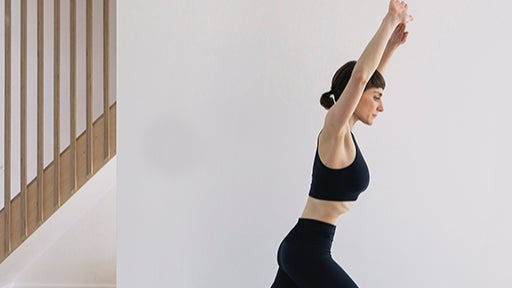
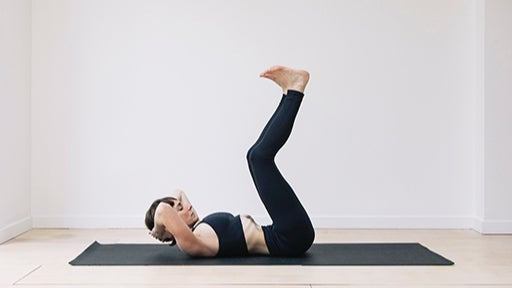
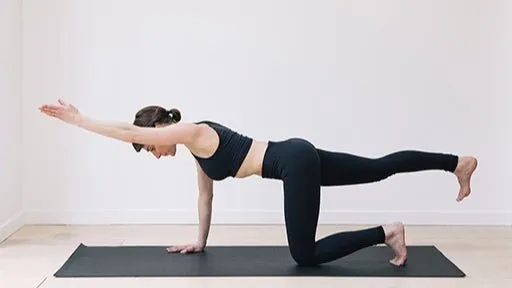
Each session teaches the breath first. You exhale fully, hold, and open your rib cage. Your diaphragm lifts and your pelvic floor engages with it, without squeezing and without pushing anything downward. Then we work through postures, progressing from lying to kneeling to standing as the breath becomes reliable.
Nobody is expected to arrive knowing this. The technique is taught from scratch every time, because a group always has someone new and because the breath is worth revisiting even when you have been doing it for a year.
I keep the groups small, usually between four and ten, with eight being about right. The breath hold is easy to get subtly wrong in a way that is invisible from the outside and obvious to someone trained to look, so the size of the group is the point rather than a limitation.
Who the classes are for
- Women with prolapse symptoms, particularly a heaviness or dragging that worsens through the day
- Leaking with a cough, a sneeze, a run or a lift
- Diastasis recti, whether a few months or many years after birth
- A postnatal recovery that stalled, or never really started
- Peri-menopause and menopause, where the pelvic floor changes alongside everything else
- Anyone told to do their pelvic floor exercises who has done them diligently and seen nothing change
That last group is the one I see most. It is usually a coordination problem rather than a strength problem, which is exactly what this technique addresses.
Who is teaching
I am Simone Muller, founder of re-centre. I trained in Vigo, Spain in 2017 and became London’s first fully qualified Level 3 Low Pressure Fitness instructor, having spent fifteen years as a dancer and twenty five years teaching Pilates. I lived and taught in London for eleven years before moving to Portugal, and I still run workshops in London from time to time.
I came to this work through my own recovery. After my first child I had a third degree tear, and my pelvic floor and abdominals felt entirely disconnected. Traditional rehabilitation did not work for me, which is how I found Hypopressives in the first place.
If a class does not fit, the online option is the same teaching
A Tuesday or Thursday morning does not suit everyone, and plenty of the women I teach are elsewhere in Portugal or further afield. The live online classes run weekly and are capped for the same reason the in-person groups are, so you still get corrected rather than left to copy a screen. Alongside those sit more than 350 recorded classes from 5 to 45 minutes, a beginner series, and a one-to-one check-in with me.
In a randomised controlled trial of 117 women, eight weeks of supervised Hypopressive training improved pelvic floor muscle strength and reduced the severity of urinary incontinence symptoms. Supervision is the part that trial tested, and it is the part I try to preserve whether you are on a mat in my room or on one at home.
Before you join
The breath hold is not suitable for everyone. It should not be done during pregnancy, or if you have a heart condition, uncontrolled high blood pressure, or are less than six weeks after a vaginal birth or twelve weeks after a caesarean. If you are pregnant you can still hold the postures without the breath hold, and I will adapt the class for you.
When to Seek Assessment
This page is educational and cannot diagnose the cause of your symptoms. See a doctor or a pelvic health physiotherapist before starting if you are leaking urine or stool, feel a bulge, have pain with movement or sex, or have symptoms that are new, severe or changing. Seek medical advice promptly rather than waiting if you notice bleeding or a sudden change. Many of the women in my classes train alongside physiotherapy rather than instead of it, and that combination tends to work better than either alone.
If you want to understand the technique before getting in touch, our guide to who should avoid Hypopressives sets out the safety side in full.
Sources
- Molina-Torres et al. (2023): An 8-week hypopressive exercise training programme on urinary incontinence and pelvic floor muscle activation, Neurourology and Urodynamics
- Saraiva and McLean (2026): Intra-abdominal pressure and pelvic floor muscle activation during hypopressive exercises, Physiotherapy
- NICE NG123: Urinary incontinence and pelvic organ prolapse in women, management
- NHS: Pelvic organ prolapse, symptoms and treatment