Something I see regularly in my work is women arriving with a hiatal hernia diagnosis and a head full of conflicting advice about exercise. Some have been told to stop moving altogether. Others have pushed through workouts that made their symptoms significantly worse. Most are somewhere in the middle – confused, cautious, and not entirely sure what their body can handle anymore.
A hiatal hernia occurs when part of the stomach pushes upward through the hiatus, the opening in the diaphragm where the oesophagus passes through. The diaphragm is the dome-shaped muscle that separates your chest from your abdomen, and it plays a central role in both breathing and pressure management. When the stomach slips through that opening, the system is disrupted. You may notice chest pressure after meals, a persistent lump-in-throat sensation, shortness of breath, or acid reflux that seems to flare unpredictably. Some women experience all of these. Others barely notice anything at first. What I want you to know is that exercise is not the enemy here, but the type of exercise matters enormously.
Can You Exercise with a Hiatal Hernia?
Yes, it is possible to exercise with this condition, but you need to be cautious. The main rule is to avoid any activity that puts too much pressure on your abdomen. This means no heavy lifting or intense abdominal workouts.
So, you can do exercises that involve gentle movement. Exercise can improve digestion, help you manage your weight, and lower your stress levels. All of this makes hernia symptoms easier to handle.
Stick with low-impact activities that do not put excessive pressure on your core. You can try walking, swimming, yoga (but only certain poses), or light cycling. Always listen to your body. If some movements make you feel uncomfortable, stop.
Best Exercises for Hiatal Hernia Support
When you have a hiatal hernia, you need to do exercises that keep your body moving without pushing your stomach further out of place. The exercises that are safe for this condition are:
A. Hypopressives
If you have a hiatal hernia, the way you breathe and manage pressure matters enormously. Most traditional core exercises – crunches, planks, heavy lifting – increase intra-abdominal pressure, which is exactly what you want to avoid. Hypopressives work in the opposite direction.
Using specific postures and a breath-hold technique called an apnea, Hypopressives create a gentle vacuum effect inside the torso. This decompresses the abdomen, takes pressure off the diaphragm and supports the area around the hiatus – the very opening where your stomach is protruding. Rather than pushing down and out, you are training your body to lift and support from the inside.
For women with a hiatal hernia, this makes Hypopressives one of the safest and most targeted forms of core training available. You are not just strengthening your core, you are retraining how your body manages the pressure that drives your symptoms.
Want to try Hypopressives for your hiatal hernia? Start your free 14-day trial here.
B. Gentle Yoga
Yoga can be genuinely supportive for a hiatal hernia when the right poses are chosen, and genuinely aggravating when the wrong ones are.
Here is what I recommend in practice.
Cat-Cow is one of the most useful starting points. The gentle spinal movement coordinates with the breath, encourages diaphragmatic mobility, and creates a rhythmic decompression through the torso without any downward pressure on the abdomen.
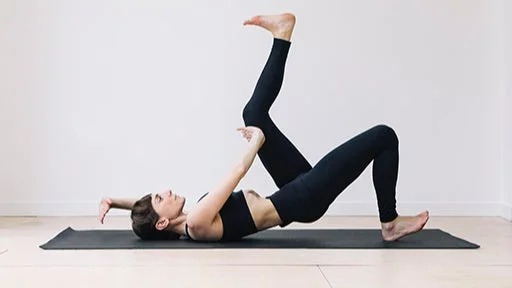
Supported Bridge with a block or bolster under the sacrum. This allows a mild thoracic opening while keeping the body in a position that does not compress the stomach. It is passive, supported, and safe for most people with this condition.
Legs Up the Wall (Viparita Karani) is a restorative inversion that is mild enough to be appropriate here. It encourages venous return, reduces tension in the diaphragm, and is generally well tolerated – unlike full inversions, which are not.
A gentle seated forward fold with breath awareness can help release tension in the posterior diaphragm, provided you are not folding so deeply that you compress the abdomen.
What to avoid in yoga is equally important. Deep twists compress the abdominal organs and can worsen reflux. Full inversions, such as headstands and shoulder stands, reverse the pressure gradient in a way that is counterproductive. Boat pose (Navasana) creates significant intra-abdominal pressure and should be avoided entirely. The rule of thumb: if a pose requires you to brace or bear down, it is not appropriate here.
C. Walking and Upright Activity
Walking is one of the most consistently helpful things you can do with a hiatal hernia, and it is often underestimated. It supports digestion, encourages gastric motility, and keeps you upright, all of which work in your favour.
One practical guideline: wait at least 30 minutes after eating before walking, and ideally longer after a larger meal. Walking too soon after food increases the likelihood of reflux.
On incline walking, gentle gradients are generally fine and can be beneficial for cardiovascular health without adding abdominal strain. Steep inclines that cause you to hunch forward or brace through the core are worth avoiding.
There is also a nervous system dimension to walking that is worth understanding. Steady, rhythmic walking activates the vagus nerve, the primary nerve of the parasympathetic system, which directly influences digestion and can reduce the stress-driven symptom flares that many women with a hiatal hernia experience. If your symptoms tend to worsen when you are under pressure, a daily walk is doing more than you might think.
D. Breathing and Stretching
This is an area that is almost always overlooked, and in my experience it can make a significant difference to how symptoms are managed day to day.
Diaphragmatic breathing — sometimes called belly breathing — involves consciously directing the breath downward into the lower ribcage and abdomen rather than allowing it to rise into the chest. To practise it: sit or lie comfortably, place one hand on your lower ribs and one on your chest. As you inhale, the lower hand should rise and the chest hand should stay relatively still. Exhale slowly and fully. This is not a passive exercise, it takes practice, particularly if you have spent years breathing shallowly.
For a hiatal hernia specifically, diaphragmatic breathing matters because it encourages the diaphragm to move through its full range of motion. A restricted or overworked diaphragm contributes to the pressure imbalance that drives symptoms. Breathing well is, in a very real sense, treating the root cause.
Alongside breath work, decompressing the thoracic region — the mid and upper back — can relieve tension that accumulates around the diaphragm. Two gentle options:
A doorway stretch — standing in a doorframe with arms at 90 degrees, gently leaning forward until you feel a stretch across the chest and anterior shoulders; this opens the thoracic cavity and counteracts the forward compression that worsens symptoms.
A supported chest opener — lying over a rolled blanket or bolster placed horizontally across the mid-back; this allows gravity to gently open the chest and decompress the area around the hiatus. Even five minutes here can shift how the diaphragm feels.
Getting Started With Hypopressives
For the Hypopressives classes it is important that you learn the Breathing/Apnea technique properly so that you can get the most out of the classes and the time you invest in yourself. Each week I run a few Fundamentals sessions on Zoom where I explain the technique and guide you through all the steps.
I will also give you feedback to make sure that you’re doing it correctly. For some, the technique may come more quickly than others. Some clients, who are tighter in the ribs and thoracic spine do tend to take a little longer.
Here’s the golden rule – for impactful change, I recommend at least three 15 to 20-minute workouts per week. Consistency is your best friend on this journey towards wellness.
Exercises to Avoid
Some exercises are not safe when you have a hiatal hernia. They build too much pressure in your core or stretch the wrong muscles. You should avoid these:
- Crunches and sit-ups squeeze your stomach and can make your hernia worse.
- Planks put too much strain on your diaphragm.
- Heavy lifting increases intra-abdominal pressure quickly and should be approached with care.
- High-impact movements such as jumping, sprinting, and contact sports can worsen symptoms.
- Exercises done flat on your back after eating can push stomach acid back up into your throat.
You should always consult your doctor or a physical therapist before trying something new.
A note on weight lifting
The advice to avoid lifting with a hiatal hernia is often delivered as a blanket ban, and that is not particularly helpful. What you are actually trying to avoid is the Valsalva manoeuvre – the instinctive breath-hold that happens when you strain under load. When you hold your breath and bear down, intra-abdominal pressure spikes sharply, and that is what drives symptoms. The lift itself is not necessarily the problem. The breath management is.
In practice, this means exhaling on the exertion — breathing out as you lift, push, or pull — rather than holding your breath through the effort. This single adjustment changes the pressure dynamic significantly. For someone managing a hiatal hernia, a sensible starting point is light resistance: think resistance bands, light dumbbells in the 2–5kg range, or bodyweight movements that do not require bracing. The goal is to build load tolerance gradually, always with breath leading the movement. Progress when you can complete your current load comfortably, without symptoms, and with consistent breath control. That is the benchmark, not a number on a weight.
A note on running
Running is not a straightforward no. For someone with a small sliding hiatal hernia whose symptoms are well managed, light jogging on a flat surface, with attention to breathing rhythm and an upright posture, may be entirely appropriate. What is not advisable is high-impact sprinting, which creates significant repetitive downward pressure through the abdomen and can aggravate symptoms considerably. If you run, breathe rhythmically, stay upright, and stop if reflux or chest pressure begins. Your symptoms are the most reliable guide you have.
Lifestyle Tips that Support Exercise
When you are trying to manage a hiatal hernia, some daily habits, especially around meals and movement, can make a big difference:
Eat Light Before Exercise
Big meals stretch your stomach and make symptoms worse. Eat lighter meals, so it does not push the stomach upwards. Also, eat vegetables, whole grains, and lean proteins to avoid acid reflux.
Stay Upright
Good posture helps with reducing pressure on the abdomen and diaphragm. You should stand or sit tall while eating or walking. Slouching presses on your belly and can push things the wrong way.
Avoid Lying Down After Eating
Doing this makes it easier for stomach acid to flow upwards. To avoid this, take your dinner a couple of hours before going to sleep. This habit helps prevent acid reflux and gives your stomach time to settle.
Not sure if Hypopressives is right for you? Book a free 15-minute call with me to discuss your symptoms.