Quick Answer: Can Kegels Make a Hypertonic Pelvic Floor Worse?
Yes. If your pelvic floor is already too tight or unable to relax fully, doing more Kegels can reinforce the tension rather than solve the problem. A hypertonic pelvic floor can contribute to pelvic pain or pressure, pain during sex, urinary urgency or leaking, constipation, difficulty emptying the bladder or bowel, and lower back or tailbone pain.
Kegels are not “bad”, and they can help when the pelvic floor is genuinely weak. But a hypertonic pelvic floor often needs a different first approach: pelvic health assessment, relaxation or down-training, breathing and coordination work, gentle movement, and support with any contributing pain, stress or bowel issues.
If Kegels make your symptoms worse, do not simply do more. Pause and seek advice from a pelvic health physiotherapist or GP so you can understand whether your pelvic floor needs release, strengthening, or a combination of both.
“Just do your Kegels.”
It is probably the most common piece of pelvic floor advice a woman ever receives. You may have heard it after pregnancy, during menopause, the moment you mentioned leaking, or after telling someone that sex had become uncomfortable.
For some women, Kegels genuinely help. But not for everyone, and that distinction gets lost almost every time this advice gets handed out.
If your pelvic floor is already holding too much tension, rather than lacking strength, doing more contractions will not touch the actual problem. In some women it can make things worse: more pelvic pain, more urgency, more constipation, more difficulty emptying the bladder or bowel, and more pain during sex.
This is one of the reasons so many women tell me they have been doing their Kegels faithfully for months, sometimes years, and still are not feeling better.
The pelvic floor does not only need to be strong. It needs to be able to contract and release.
For the broader picture of the condition itself, I’ve written a fuller guide: Hypertonic Pelvic Floor: Symptoms, Causes and Treatment.
What a Hypertonic Pelvic Floor Actually Is
A hypertonic pelvic floor is not simply a “strong” one.
It is a pelvic floor carrying too much tension. The muscles may be constantly switched on, guarded or braced, unable to lengthen and release properly when they need to.
Think of holding a bicep curl all day. The muscle is technically contracted, but that does not make it more useful. It gets tired, sore, and eventually worse at its job. Your pelvic floor works the same way.
A healthy pelvic floor should be able to contract gently when you need support, respond to sudden rises in pressure such as coughing or lifting, relax fully for comfortable sex, bowel movements and urination, lengthen and soften on a deep breath, and return to an appropriate resting tone afterwards.
When it cannot release, the result is often a confusing mixture of symptoms. You may feel tight, but also weak. You may leak, but also feel urgency. You may feel pressure, without prolapse. That overlap is exactly why self-diagnosis is so difficult, and why “just do your Kegels” so often misses the mark.
Why Kegels Can Be the Wrong Starting Point
Kegels are voluntary pelvic floor contractions, usually described as the action you would use to stop the flow of urine or hold in wind. Used in the right situation, they genuinely help. They have strong support as a conservative treatment for stress urinary incontinence, and they can be useful for some women with pelvic organ prolapse.
But a muscle needs to release as well as contract. If your pelvic floor is already tight or painful, constantly braced, unable to relax after a contraction, difficult to coordinate when you wee or open your bowels, or overreactive during sex, exercise or stressful periods, then adding more squeezing is a bit like clenching an already clenched fist.
The issue is not a lack of effort. The issue is that your body may need help learning to let go.
In pelvic floor physiotherapy, this is often called down-training: helping the muscles reduce unnecessary resting tension and improving how they coordinate with your breathing, movement, bladder and bowel. It is considered a genuine first-line approach for a non-relaxing pelvic floor, and can involve diaphragmatic breathing, relaxation work, core stabilisation and gentle reverse-Kegel coordination work. A systematic review of pelvic floor physical therapy for hypertonicity found real, meaningful improvements in muscle tone, pain and quality of life across the studies it reviewed, supporting release-focused work as a genuine first step.
Signs Your Pelvic Floor May Be Too Tight
No article, mine included, can diagnose your pelvic floor for you. But these are the signs that make it worth considering whether tension, not weakness alone, is part of your picture.
Pelvic Pain or Pressure
An ache, burning, tightness, heaviness or pressure in the pelvis, perineum, vagina, rectum, hips or lower abdomen. It might be constant, or it might flare after sitting, exercise, penetration, a stressful week or a long day on your feet.
Pain During or After Sex
Pain with penetration, a sense that the muscles will not let go, burning afterwards, or discomfort during a smear test or with a tampon, can all be linked to pelvic floor overactivity. Pain during sex has many possible causes, so I would never assume it is always muscular, but it deserves proper support regardless.
Urinary Urgency, Frequency or Difficulty Emptying
A tight pelvic floor can create the feeling that you need to wee urgently or often. It can also make it hard to start, hard to fully empty, or hard to relax enough for the stream to flow normally. This one surprises a lot of women, because urinary symptoms get assumed to mean weakness almost automatically.
Constipation, Straining or Incomplete Emptying
The pelvic floor needs to relax and coordinate during a bowel movement. If it stays tense, or contracts when it should be letting go, opening your bowels can become difficult, painful or incomplete, and straining creates its own loop: more pressure asking more of a system that is already overwhelmed.
Leaking
Yes, a hypertonic pelvic floor can contribute to leaking too. A muscle that is constantly gripping becomes fatigued and poorly coordinated, and loses the ability to respond quickly when you cough, sneeze, laugh or jump.
“Leaking means weak” is an incomplete explanation, and I see it trip women up constantly.
Symptoms That Flare with Stress
If your jaw, shoulders, stomach and pelvic floor all seem to tighten under pressure, that is worth noticing. Stress is not the only cause of a hypertonic pelvic floor, but your nervous system affects muscle tone throughout your body, and for some women, stress, poor sleep, anxiety or past trauma can maintain a physical holding pattern in the pelvis.
Other Reasons a Pelvic Floor Can Become Hypertonic
A hypertonic pelvic floor rarely has one single cause. It is usually a combination of physical history, movement habits, stress and protective response.
Birth Injury or Postnatal Guarding
A difficult birth, significant tearing, an instrumental delivery, ongoing scar discomfort or a painful recovery can leave the body in a protective holding pattern. That is not your body doing something wrong. It is a normal response to threat or pain. The problem is when the guarding outlasts the injury that caused it.
Repeated Kegels Without Full Release
Kegels themselves do not automatically cause hypertonicity. But doing repeated contractions without understanding the release phase, or doing them when pain and tension are already present, can reinforce a pattern of always holding. A healthy contraction should always be followed by a genuine release.
Chronic Bracing and Breath-Holding
Many women hold their stomach in all day, grip their glutes, tuck the pelvis, suck in through the ribs, or brace before every movement. These habits are often taught as good posture or core engagement, but the core and pelvic floor need variability. If they never get the chance to soften, tension becomes your default setting.
High-Impact or High-Load Exercise
Running, jumping, heavy lifting and high-intensity training are not automatically harmful. But returning to them too quickly after birth, surgery or a period of pelvic symptoms can overwhelm a system that is not ready. A gradual return, with good breathing and pressure management, gets you further than pushing through.
Trauma, Pain and the Nervous System
It is worth acknowledging that emotional trauma, sexual trauma, chronic pain and anxiety can all affect how the nervous system holds tension in muscle. You do not need to explain or disclose anything to begin getting support, but working with a trauma-informed pelvic health professional can matter enormously if your pelvic tension is connected to a wider experience of pain, fear or safety.
What to Do Instead of More Kegels
The answer is not necessarily never strengthen your pelvic floor. It is understanding what needs to come first.
For many women with a hypertonic pelvic floor, the first priority is learning to recognise tension, restore the ability to release, and improve coordination. Strength work can still have a place later, but it needs to be matched to your body, not prescribed automatically.
Get a Pelvic Health Assessment
An internal assessment with a pelvic health physiotherapist is the clearest way to actually understand what is happening. They can assess resting tone, tenderness, strength, coordination, relaxation, prolapse support, and how your pelvic floor responds to breathing and movement.
You may have a hypertonic pelvic floor, a hypotonic one, or a combination of both. Plenty of women do. The assessment removes the guesswork.
If you want the fuller picture of what pelvic floor dysfunction can look like and how rehabilitation actually works, I’ve covered that in Pelvic Floor Dysfunction and Rehabilitation.
Learn Diaphragmatic Breathing
Your diaphragm and pelvic floor move together. On a relaxed inhale, the diaphragm descends and the pelvic floor should respond by lengthening slightly. On the exhale, both return.
If you are chest-breathing, holding your breath, constantly braced or unable to let your ribs move, your pelvic floor is not getting the movement and relaxation it needs.
A simple place to start is sitting or lying comfortably with one hand on your lower ribs. Let the ribs expand gently to the sides and back as you inhale. Exhale without forcing anything or sucking your stomach in. You are not aiming for a huge breath. You are aiming for an easy, quiet one that your body does not have to fight for.
Practise Positions That Encourage Release
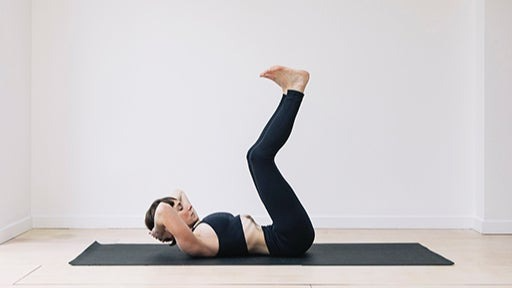
Child’s Pose, Happy Baby, a supported deep squat, knees to chest, or a supported butterfly stretch can help some women feel more space through the hips and pelvic floor.
What matters is not forcing the stretch, it is pairing the position with slow, unpressured breathing and letting the pelvic floor soften. If any position increases pain, pressure or anxiety, come out of it. More intensity is never more therapeutic.
Reduce Straining
Address constipation, avoid holding your breath when you lift, and give yourself proper time on the toilet. Never force a bowel movement. A pelvic health physiotherapist can teach you positioning and coordination strategies if emptying is difficult.
Notice Your Daily Bracing Pattern
Ask yourself a few times through the day: am I holding my stomach, buttocks, jaw or pelvic floor right now?
If the answer is yes, practise a small release: unclench the jaw, soften the glutes, let the ribs move, let the lower belly relax. It sounds almost too simple. For women who have spent years bracing, it can be genuinely profound.
Where Hypopressives Fit
Hypopressives are not a substitute for a pelvic health assessment, particularly if you have pelvic pain, pain during sex, marked urgency, constipation or difficulty emptying.
But for some women, once they understand the technique and have been properly screened, they can be a genuinely useful part of a broader approach. Unlike repeated Kegels, Hypopressives work through posture, rib cage mobility, breathing and reflex activation rather than deliberate pelvic floor squeezing.
The aim is to help the diaphragm, deep abdominals and pelvic floor coordinate as one pressure-management system, rather than asking the pelvic floor to do all the work alone. For women who habitually brace, hold their breath, or feel disconnected from their core, that re-education can matter a great deal.
One caveat worth being clear about: Hypopressives involve a specific Apnea technique, a breath hold after a full exhale, and it needs to be learned with proper guidance and modified where necessary. If you notice increased pain, heaviness, urgency, pressure or any worsening of your symptoms, stop and get individual advice.
You can learn more about Hypopressives, or read my fuller guide to Strategies for Easing Tension in a Hypertonic Pelvic Floor.
When Kegels May Still Be Useful
Kegels are not the villain here.
They have a genuine place in treatment where an assessment shows pelvic floor weakness, poor endurance, or difficulty generating a contraction at all. They can also be reintroduced later, once a woman has first learned to release an overactive pelvic floor.
It comes down to sequencing. Before you ask a muscle to work harder, make sure it can relax. A useful pelvic floor contraction was never meant to be a permanent squeeze. It is a gentle lift followed by a full release.
When to Seek Professional Support
Please seek individual medical or pelvic health advice if you experience:
- Pelvic pain that is persistent, worsening, or affecting daily life.
- Pain during or after sex.
- Difficulty urinating, recurrent urinary symptoms, or a feeling you cannot fully empty your bladder.
- Severe constipation, straining, pain with bowel movements, or incomplete emptying.
- New or worsening pelvic heaviness, bulging or prolapse symptoms.
- Leaking that is not improving with generic pelvic floor exercises.
- Symptoms that worsen whenever you do Kegels, abdominal exercise or high-impact activity.
- Any symptoms that leave you feeling worried, frightened or unable to live normally.
A GP can rule out medical causes. A pelvic health physiotherapist can assess your muscle function and build you a proper plan.
A Final Word
If Kegels have not helped you, it does not mean you have failed.
It may simply mean your pelvic floor needs a different conversation.
Your body is not a problem to be squeezed into submission. It is a system that needs strength, yes, but also safety, movement, breath, release, and the right kind of support around it.
If you are not sure whether your pelvic floor is tight, weak, or some mixture of both, start with an assessment. And if you would like support learning a lower-pressure, whole-body approach to pelvic health, book a free 15-minute call with me, or start your free 14-day re-centre trial.