Quick Answer
Pelvic floor rehabilitation is a structured, supervised programme built around an assessment of how your pelvic floor is actually working, not a generic set of squeezes. It usually combines muscle training tailored to what the assessment found, breathing and posture work, and changes to daily habits that load the pelvic floor. NICE recommends a supervised programme lasting at least three months as first line treatment. If you have been doing exercises alone without progress, an assessment is the step that tends to change things.
The word rehabilitation puts a lot of women off, because it sounds like something you only get after surgery or a serious injury. In practice it just means a planned course of treatment with someone checking it is working. That is the part most women have never had. They have had a leaflet, or a midwife mentioning pelvic floor exercises once, or a vague instruction to squeeze as if stopping urine. None of that is rehabilitation, and it is not surprising when it does not work.
Why Assessment Comes First
The single most useful thing an assessment does is establish what kind of problem you actually have. A pelvic floor that cannot generate much force needs strengthening. A pelvic floor that is holding tension all day and cannot fully let go needs the opposite, and squeezing it harder tends to make the symptoms worse. Both can produce leaking, heaviness and discomfort, so the symptom alone cannot tell you which one you are dealing with.
This is why a clinician will usually offer an internal examination. It is the only reliable way to feel whether the muscle contracts, how strongly, how long it holds, and crucially whether it releases afterwards. You can decline, and plenty of women do at first. An external assessment still tells a clinician a great deal about your breathing, your posture and how you manage pressure. It just tells them less about the muscle itself.
What a Programme Usually Contains
Pelvic floor muscle training is the core of it, and the evidence behind it is strong. A Cochrane review of pelvic floor muscle training for urinary incontinence concluded that we can be confident the training can cure or improve symptoms. That is unusually confident language for a Cochrane conclusion and it is worth knowing when you are deciding whether this is worth your time.
The dose matters as much as the exercise. NICE guidance describes a programme of at least eight contractions performed three times a day, supervised, for a minimum of three months. Where pelvic organ prolapse is involved, the recommended course runs for at least sixteen weeks. Those numbers are the difference between a programme and a good intention.
Around that sits the work most women have never been shown. How you breathe under effort, whether you brace and hold your breath every time you lift something, how you sit for eight hours, how you empty your bladder and bowel, and what you do in the gym. Your pelvic floor is part of a system with your diaphragm and your deep abdominals, and training it in isolation from the rest of that system is why so many women plateau.
Where Hypopressives Fit
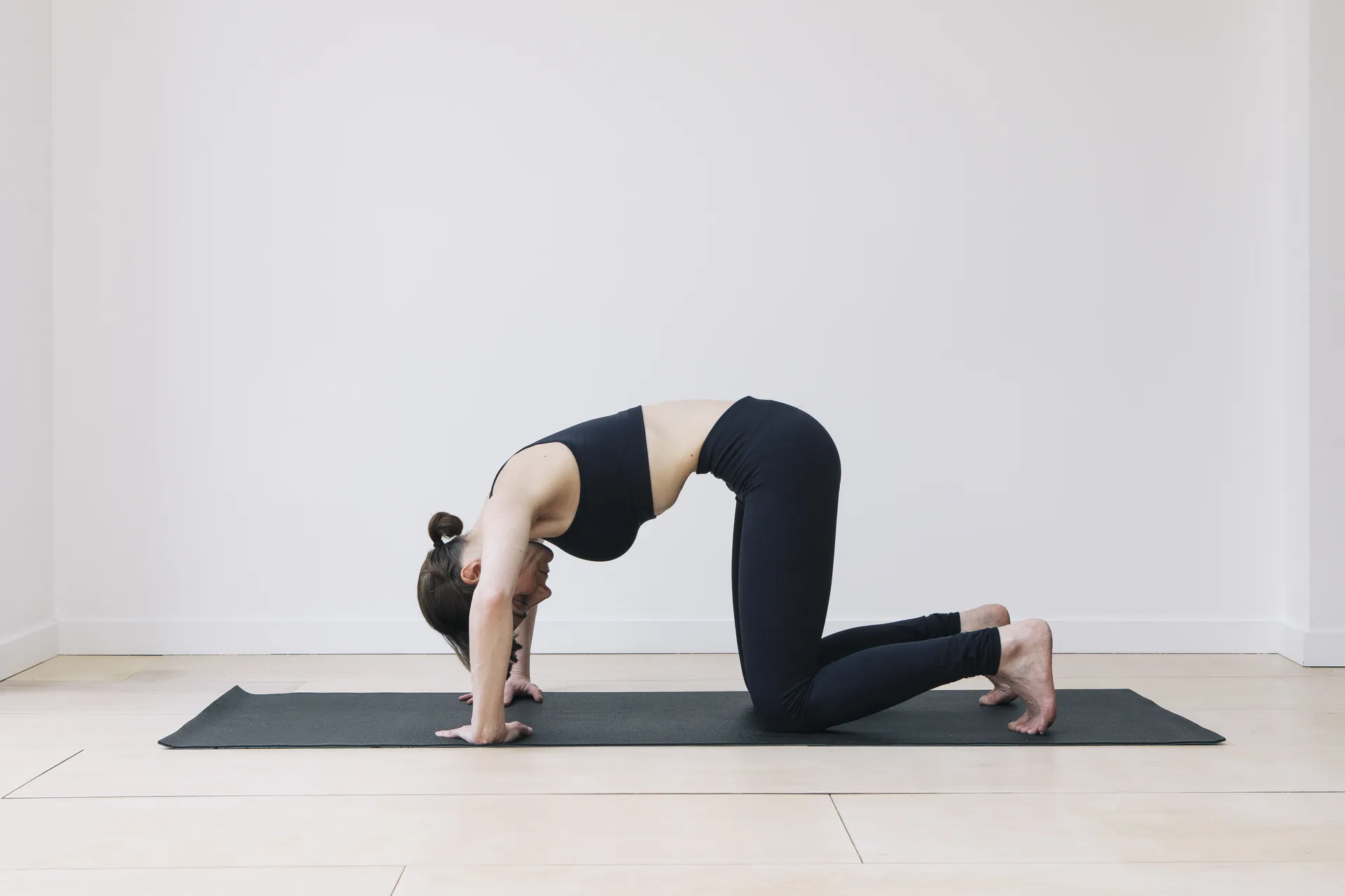
Hypopressives work on exactly that coordination problem. Rather than asking you to squeeze, the technique uses a breath hold and specific postures, and the pelvic floor recruits as part of the pattern. In a randomised controlled trial of 117 women, eight weeks of Hypopressive training improved pelvic floor muscle strength and reduced the severity of urinary incontinence symptoms compared with no intervention.
In my experience teaching Hypopressives, the women who get the most from it are the ones who arrive saying they have done their exercises for months and nothing has changed. That is usually a coordination problem rather than a strength problem, and more squeezing was never going to solve it. It works well alongside a physiotherapy programme rather than instead of one.
Why Supervised Makes Such a Difference
The word that keeps appearing in the guidance is supervised, and it is doing a lot of work. NICE does not recommend pelvic floor exercises in general, it recommends a supervised programme, and the distinction is deliberate. Studies that find strong results almost always involve someone checking the contraction is correct before the training starts.
There is a practical reason for that. A meaningful proportion of women asked to contract their pelvic floor for the first time do something else entirely. They squeeze their buttocks, they pull in their stomach hard, or they bear down, which is the exact opposite of the intended movement. Nobody realises, because you cannot see it and the sensation is unfamiliar. Months of diligent practice can go into reinforcing the wrong pattern.
Supervision also fixes the dose problem. Left alone, most people do a handful of squeezes when they remember, usually in the car. A programme asks for eight contractions three times a day, with a specified hold, progressing over weeks. That is a very different stimulus, and it is what the trials actually tested.
What Progress Looks Like Week by Week
Expecting change on the wrong timescale is one of the main reasons women stop early, so it helps to know the usual shape of it.
- Weeks one to three. Mostly learning. The contraction gets easier to find and you start noticing your pelvic floor during the day, often for the first time.
- Weeks four to eight. The first symptom changes usually appear here. Often fewer leaks with coughing or sneezing, or less urgency, rather than everything resolving at once.
- Weeks eight to twelve. Endurance builds. The gains tend to show up in the situations that used to catch you out, like a run or a heavy lift.
- Beyond twelve weeks. This is where the programme consolidates. NICE sets three months as a minimum rather than a target for a reason.
If nothing at all has shifted by around eight weeks of genuinely consistent work, that is useful information rather than failure. It usually means the original assessment needs revisiting, because something other than weakness is driving the symptoms.
What to Track Before Your Appointment
Going in with a week of notes makes the first appointment far more useful than trying to remember on the spot.
- When symptoms happen, and what you were doing at the time
- Roughly how often you pass urine, and whether you go just in case
- Whether anything feels heavy, and whether that changes through the day
- What you have already tried, for how long, and what happened
- Anything that feels too minor or too embarrassing to mention, which is usually the useful part
What to Ask at Your Appointment
- “Is my pelvic floor weak, tight, or is this a coordination problem?”
- “How will we know if this is working, and by when?”
- “How many sessions should I expect, and what happens between them?”
- “Is there anything I am currently doing that is working against this?”
- “Can I keep doing my usual exercise while we do this?”
When to Seek Assessment
This guide is educational and cannot diagnose the cause of your symptoms. Arrange assessment with a GP or pelvic health physiotherapist if you are leaking urine or stool, feel heaviness, dragging or a bulge, have pain with sex or with inserting a tampon, or if symptoms are affecting what you are willing to do day to day. See a GP promptly rather than waiting if you notice bleeding, a sudden change in symptoms, or pain that is new and persistent, since those need looking at rather than training.
If you would like to understand the symptom side in more detail first, our guide to weak pelvic floor muscle symptoms covers what these signs tend to mean and what usually responds to training.
Sources
- NICE NG123: Urinary incontinence and pelvic organ prolapse in women, management
- Dumoulin et al. (2018): Pelvic floor muscle training for urinary incontinence in women, Cochrane Database of Systematic Reviews
- Molina-Torres et al. (2023): An 8-week hypopressive exercise training programme on urinary incontinence and pelvic floor muscle activation, Neurourology and Urodynamics
- NHS: Pelvic organ prolapse, symptoms and treatment
- Chartered Society of Physiotherapy: Finding a physiotherapist in the UK