Diastasis Recti After a C-Section: What’s Different & How to Recover
Something I hear again and again from women who have had C-sections is that they felt completely unprepared for the recovery. Not just the physical side of it, though that alone is significant, but the lack of information, the vague guidance, and the quiet expectation that they would simply get on with it.
And then, on top of the surgical recovery, many of these women are also dealing with Diastasis Recti – and nobody has joined those two dots for them.
If that is where you are right now, this article is for you. Not to overwhelm you, but to give you the honest picture that you deserved from the start.
If you are new to Diastasis Recti and want to understand what it is, how to self-check, and what the symptoms feel like, I’d encourage you to read the main Diastasis Recti Guide first and come back here. This article focuses specifically on what is different when you have had a C-section – because the recovery really does need its own approach.
Why a C-Section Changes Everything
Diastasis Recti happens in virtually every pregnancy. It is not caused by how you deliver, it is caused by the growing uterus and fetus placing pressure on the abdominal wall over months. So whether you had a vaginal birth or a C-section, the separation is likely to be there.
What changes with a C-section is everything that sits alongside it.
A caesarean is major abdominal surgery. The surgeon cuts through multiple layers of tissue (skin, fat, fascia, and the uterine wall) to deliver your baby. The rectus abdominis muscles themselves are typically moved aside rather than cut, but the fascia and connective tissue surrounding them are directly affected. And fascia, that thin but incredibly important connective layer that wraps around every muscle in your body, plays a huge role in how your core functions.
So what you are left with is not just Diastasis Recti. You are also dealing with:
- A healing surgical wound that needs time and care
- Scar tissue forming through multiple layers of tissue
- Fascial disruption affecting how your deep core muscles switch on
- A nervous system that needs to feel safe before it will allow full movement again
This is a dual recovery. And it deserves to be treated as one.
The Scar Tissue Piece – and Why It Matters More Than You Think
This is the part of C-section recovery that I feel most strongly about, because it is so consistently overlooked.
As your C-section scar heals, the layers of tissue beneath it can adhere to each other. Think of it like cling film sticking to itself, the layers that should glide freely against each other become stuck. When this happens through the fascia of the abdominal wall, it can create a tethering or pulling sensation, restrict how the deep core muscles activate, and affect your posture and movement in ways that no amount of exercise will fix if the scar itself is not addressed.
Many women also experience significant numbness around the scar, sometimes for months, sometimes for years. This is normal, but it is not something to simply accept and move on from. Restoring sensation and mobility to the scar area is a meaningful part of getting your core to function properly again.
Gentle scar massage, introduced at the right time, can:
- Mobilise the layers of tissue beneath the scar
- Restore sensation to the numb area around the incision
- Improve the flexibility and appearance of the scar
- Support better deep core activation by freeing the fascial restrictions underneath
When to start: Most practitioners recommend waiting until the scar is fully closed and comfortable, typically around 6-8 weeks, before beginning. Always check with your midwife, GP, or women’s health physiotherapist first.
How to begin: Start simply by placing your fingertips on the scar and applying gentle pressure in different directions – up, down, sideways, and diagonally. You are not forcing anything. You are exploring what moves freely and what doesn’t, and gradually encouraging the tissue to release. Over time you can work more deeply, but always within your comfort level and never into pain.
If your scar feels very restricted, very numb, or if you notice significant pulling when you move, please work with a women’s health physiotherapist who specialises in scar tissue. It is one of the most valuable things you can do for your recovery.
The Recovery Timeline: Being Honest With You
I would rather give you a realistic picture than a neat timeline that sets you up to feel like you are failing.
The early weeks: rest and breathe
In the first six weeks, your one job is to heal. Gentle diaphragmatic breathing, slow, deep breaths that allow your rib cage to start moving sideways, is the most valuable thing you can do in this period. It begins to reconnect the breath with the deep core without placing any load on the healing tissue. It also supports the nervous system, which has been through a great deal.
Resist the urge to do more than this. I know that is hard. But the foundation you build in these early weeks matters enormously for everything that comes after.
Six to twelve weeks: gentle reconnection
With clearance from your healthcare provider, you can begin to introduce very gentle movement. Short walks, gentle mobility work.The general guidance after a C-section is to not do focused abdominal work until 12 weeks to make sure all internal healing has happened. Scar massage can typically begin around this time too, once the wound is fully closed.
Three to six months: building the foundation
For most women, this is when Hypopressive technique can begin properly. The breathing mechanics and scar mobility work should be in place before this point. Gentle Pilates-based movement can be woven in alongside Hypopressives, always progressing at a pace your body can manage rather than a pace that looks good on paper.
Six months and beyond: rebuilding strength
With a solid foundation in place, you can begin to reintroduce more demanding exercise. Many women are genuinely surprised by how strong they feel at this stage when they have taken the time to build properly. The women I work with who have been most patient in the early months are consistently the ones who feel the most capable later on.
in your recovery?
What to Avoid – and Why
The bounce-back culture around new motherhood is something I find genuinely frustrating. The pressure to return to exercise quickly, to look a certain way, to perform recovery rather than actually do it, it does real harm. And nowhere is that more true than for women recovering from a C-section with Diastasis Recti.
Please avoid the following until you have a solid foundation and proper clearance:
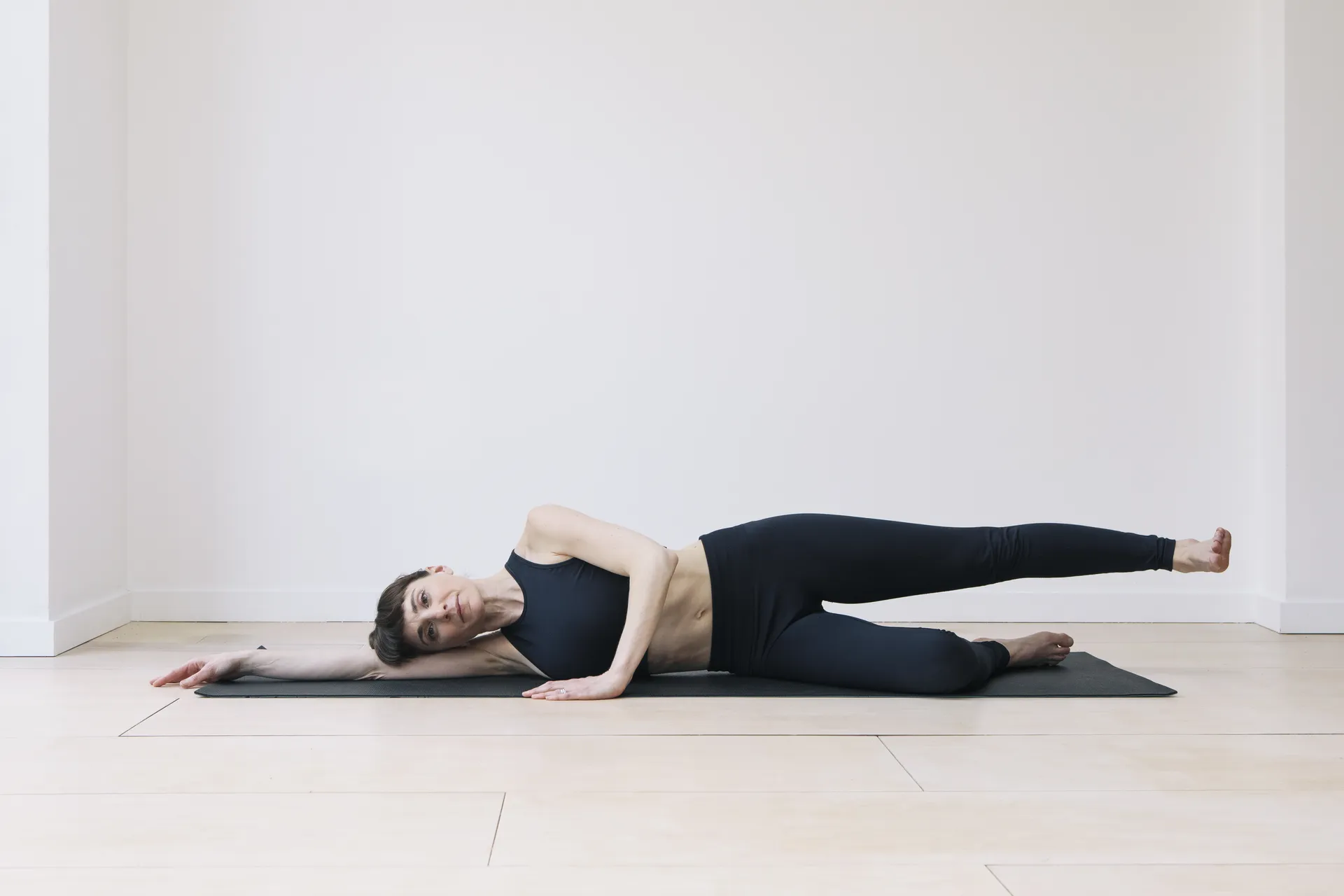
- Sitting straight up from lying down: always roll to your side and use your arms to push up. Every time. This protects both your scar and your midline.
- Crunches, sit-ups, and traditional abdominal exercises: without enough abdominal support these can increase intra-abdominal pressure and push directly outward on weakened connective tissue. These will be something that can come once you have build good internal strength.
- Heavy lifting: particularly anything that causes you to hold your breath or bear down
- High-impact exercise: running, jumping, and HIIT before your foundation is in place
- Any exercise that causes doming, pulling around the scar, or pelvic floor symptoms: these are signals, not something to push through
None of this is forever. It is simply about doing things in the right order.
How Hypopressives Help Where Other Exercise Falls Short
Most traditional core exercises work by increasing the pressure inside the abdominal cavity. For a core that is already compromised, by Diastasis Recti, by surgical recovery, by fascial disruption, that increased pressure pushes outward on the very tissue you are trying to heal.
Hypopressives work differently. The technique creates a vacuum effect that draws the deep core muscles inward and upward without any straining or bearing down. This makes it one of the most appropriate tools available for C-section and Diastasis Recti recovery – and one of the most underused. An 8-week randomised controlled trial by Molina-Torres et al. (2023, Neurourology and Urodynamics) found Hypopressive training significantly improved pelvic floor muscle activation, supporting the same core-function mechanism this recovery approach relies on, though that trial wasn’t specific to C-section recovery.
Over time, consistent Hypopressive practice helps to:
- Restore tone and tension to the linea alba
- Rebuild deep core strength from the inside out
- Improve pelvic floor function
- Reduce lower back pain
- Support better posture and movement patterns
I have worked with many women recovering from C-sections, some of them years or even decades after their surgery, and the results from consistent Hypopressive practice never stop moving me. Bodies that had been written off as permanently changed, finding their strength again.
C-Section vs Vaginal Birth Recovery: The Key Differences at a Glance
|
Vaginal Birth |
C-Section |
|
|
Start hypopressives |
From 6 weeks with clearance |
From 3 months with clearance |
|
Scar tissue management |
Not typically required |
Essential part of recovery |
|
Early core work |
Gentle from 6 weeks |
Breath work only initially |
|
Return to exercise |
Progressive from 6-12 weeks |
More gradual from 3-6 months |
|
Pelvic floor assessment |
Recommended |
Recommended |
|
Key additional focus |
Perineal healing if applicable |
Scar mobility and fascial release |
rebuilding properly?